 Dbak91
Affordable Website Design: What to Pay For and How to Choose
Affordable website design means paying for what your site needs to do, and nothing it doesn’t. A small business or individual in the UK can get a good site without a huge budget. The way to do it is to keep the scope clear, own your accounts, and choose a developer who explains things in plain English. This guide covers typical UK costs, what to include, how to pick a developer, and what to agree in writing before you pay.
Dbak91A Website Built Around Your NeedsDbak91 develops custom websites for individuals and small businesses, with plain-English support to help keep the scope clear.Explore Dbak91TL;DR
- Typical UK figures: DIY builders run at about £10 to £30 a month, and a professionally developed site costs about £1,500 to £6,000 or more (The Independent).
- Affordable does not mean cheapest. It means a clear scope, a fair price and no surprises later.
- Check a developer’s live work, ask for written terms, and make sure the domain and hosting are registered in your name.
- Agree who looks after updates, backups and fixes once the site is live.
- I build websites for individuals and small businesses, from £55 for a one-page Starter Website, and I scope each one before work begins.
Table of Contents
- What affordable website design really means
- What a website costs in the UK
- How to keep a custom website affordable
- How to choose a web developer
- Agree these terms in writing
- Accessibility, privacy and cookies
- My view on affordable website design
- Websites from Dbak91
- A short checklist before you commit
- FAQ
- Sources
What affordable website design really means
People search for this phrase for different reasons. Some want to get online for the first time. Some run a small business and have a site that looks dated. Some just need a simple page for a club, a service or a personal project.
In all of these cases, “affordable” is about value. A site that costs little but does not bring in enquiries is not cheap. A site that costs a lot but has features nobody uses is not good value either.
A useful way to think about it is in three layers:
- The essentials. A domain name, hosting, a clear layout that works on phones, and a way for people to contact you.
- The helpful extras. Basic search-engine setup, a simple enquiry form, a map or a gallery.
- The growth features. Online payments, booking, member areas or custom tools.
Most small sites need the first layer done well and perhaps a few items from the second. Starting there keeps the cost down. You can add the third layer later, when the business needs it.
What a website costs in the UK
The Independent’s guide to building your own business site puts DIY website builders at £10 to £30 a month and professionally developed websites at £1,500 to £6,000 or more. It adds that extras such as chat tools and ecommerce can push the cost higher.
That gap is wide, so it helps to know what sits inside each option.
| Route | Typical UK cost | What you get | What to think about |
|---|---|---|---|
| Website builder subscription | £10 to £30 a month | Templates, built-in hosting, quick launch | Monthly fee continues, less control over layout and search settings |
| Professionally developed site | £1,500 to £6,000 or more | Design and build to your needs, set up to your goals | One-off project fee, plus hosting and upkeep |
| Fully custom build | Higher, depending on features | Unique functions, complex ecommerce, strict security needs | Needs a detailed specification and a longer timeline |
The Independent notes that free builders and AI tools can get a site live cheaply, but may come with platform branding, limited storage, weaker search control and no custom domain. It says that paying for a domain and hosting may suit many small businesses better.
Yoast, a well-known search-engine optimisation company, makes a similar point in its guide to website costs. It says builders can launch quickly from around $10 to $20 a month but offer less customisation and room to grow. It says WordPress gives more control, but needs hosting, a domain and upkeep such as updates, backups and security. For fully custom builds, it gives a range of $5,000 to $20,000 or more. Those are US dollar figures, so treat them as a guide to how costs rise with complexity rather than as UK prices.
Where the money goes
When you get a quote, the total usually covers some mix of these items:
- Design: how the site looks and how visitors move around it.
- Build: turning the design into a working site that loads quickly on phones.
- Content: writing, photos and logos. Supplying your own saves money.
- Domain and hosting: yearly or monthly costs that continue after launch.
- Upkeep: updates, backups and security checks.
- Extras: forms, booking, payments, chat and similar tools.
Ask for these to be listed separately. An itemised quote lets you see what each piece costs and decide what to keep, change or leave for later.
How to keep a custom website affordable
Cost is mostly about scope. The more pages, features and revisions, the more time the project takes. Here are practical ways to keep the scope sensible.
Start with one clear goal
Write one sentence about what the site should do. For example: “Help local customers find our opening hours and request a quote.” Every page and feature should support that sentence. If it does not, it can wait.
Plan the pages before you talk to a developer
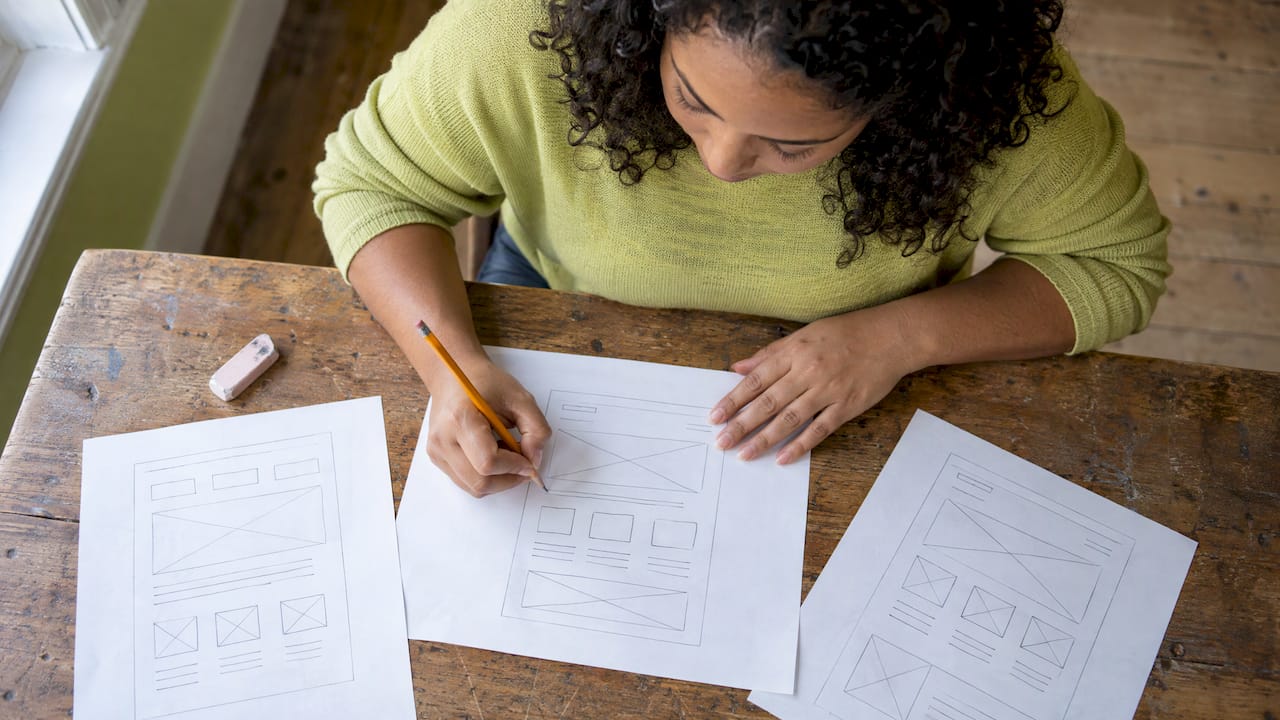
A small business site often works well with a home page, an about page, a services page and a contact page. Sketch the pages on paper and note what each should say. This saves hours of back-and-forth, and hours cost money.
Bring your own content
If you can supply clear text and good photos, the project moves faster. If you need help with wording, say so at the start so it is included in the quote rather than added later.
Choose a package that fits, then add later
A smaller package that is built well beats a large one that is rushed. A good developer will build the site so that new pages and features can be added later without starting again.
Limit the number of revisions up front
Unlimited changes are hard to price. Agree how many rounds of changes are included. This keeps the price fair for you and the timeline realistic for the developer.
How to choose a web developer
Choosing a developer is the biggest decision in the process. Price matters, but so do communication and trust. These are the things worth checking.
Look at live work
Visit the websites a developer has built, rather than just looking at screenshots. Open them on your phone. Check that they load quickly, that the menu is easy to use and that the contact details are easy to find. Pick recent projects that are similar to yours in size and purpose.
Ask what they personally did
Some portfolios show work from a whole team. Ask which parts the person you are hiring designed and built. It is a simple question, and a straight answer tells you a lot.
Listen to how they explain things
A good developer explains the plan in words you understand. They should ask about your business and your visitors before they suggest any technology. If the first reply is a list of tools and jargon, that is a signal to ask for plainer language.
Speak to past clients
If the developer has past clients, ask to speak to two or three. Good questions are: Was the work delivered on time? Did the price stay as quoted? Was it easy to get answers? Would you hire them again? A newer freelancer may not have many clients yet. In that case, try their finished projects yourself and ask how fixes are handled after launch.
Ask for an itemised price
A clear quote shows what is included, what is not, and what happens if you want more. Be careful with vague quotes that give one figure and no detail.
Check the business behind the person
For a limited company, you can look it up on Companies House. For a sole trader, ask how long they have traded and whether they carry insurance. This is ordinary checking, the same as for any tradesperson.
Ask about support after launch
Websites need looking after. Ask who handles updates, who you contact if something breaks, and whether fixes in the first weeks are covered. A developer with a clear answer has thought about your site beyond launch day.
Agree these terms in writing
A short written agreement protects both sides. Two UK legal guides set out what a good one covers. Bracton’s guide to freelance web developer contracts says the contract should define the specification, milestones, fees and how changes are handled. It should also say what is handed over, such as source code and documentation, and when ownership or licensing passes to you, usually on payment. It also says newly written code should be separated from pre-existing tools and open-source components.
The law firm Caesar’s guidance on reviewing a website development agreement adds more practical points:
- The domain name should be registered in your name, with you as the registrant and administrative contact.
- Hosting, analytics, payment, email and developer accounts should be yours or transferable to you, with the login details handed over on request and at the end of the work.
- The agreement should attach the specification, including the browsers, devices and integrations the site must work with.
- There should be an acceptance process with a testing period and clear criteria.
- It should state what happens at launch, including a set period after launch when defects are fixed at no charge.
The same guidance notes that the supplier should work with reasonable care and skill under section 13 of the Supply of Goods and Services Act 1982. It also points out that if an agency becomes insolvent, section 233B of the Insolvency Act 1986 does not keep your site online. That is why you want the code, database and logins in your own hands.
If you are unsure about a contract for a larger project, a solicitor can read it before you sign.
Accessibility, privacy and cookies
A low-cost site still has to work for everyone and respect visitors’ data.
Caesar’s guidance says the client is responsible for the privacy notice and cookie consent, while the developer should build the mechanisms for cookie consent, forms and checkout that support them. It also notes that under section 29 of the Equality Act 2010 a business must not discriminate when providing services to the public, and it suggests the agreement should name an accessibility standard.
In practical terms, ask your developer how they handle:
- Text that is easy to read and has good contrast.
- Menus and forms that work with a keyboard, not only a mouse.
- Descriptions for images.
- A privacy notice and a cookie choice for visitors.
On my own site I publish a privacy notice, a page on cookies and browser storage, and a page on accessibility and getting help, so you can see how I approach this.
My view on affordable website design
I started Dbak91 to build practical things that solve real problems. My younger brother James has Down syndrome and is non-verbal autistic, and I built James Sounds, a free communication soundboard, for him. That shaped how I think about technology: it should be clear, useful and easy to use. I bring the same thinking to websites.
I work full-time, and I take on private projects at weekends. I say this at the start because I would rather be honest about my time than promise things I cannot do. It also means each project gets my full attention while I am working on it, and I keep the number of projects small enough to do them well.
Affordable, to me, means clear scope and plain English. We talk through what you need, agree what the site will include, and write down how we will work together. You can read my approach on the working together and cancellation page. My introductory package prices are published on my services page, because a one-page site for an individual and a larger business site are different jobs. Anything beyond a package is scoped with you first, and the price is agreed in writing before work begins.
Many of my projects include open-source parts. That is a choice I make on purpose: it keeps things open, understandable and shareable. If you want to see what I build, my portfolio includes finished products as well as ongoing training work.
If you are unsure what you need, start by telling me what you want your visitors to do. I will help you work out the rest.
David
Websites from Dbak91
I offer three website packages for individuals and small businesses: a one-page Starter Website for £55, a Business Website of up to five pages for £110, and a Premium Website of up to eight pages from £180. I also build custom sideloaded Android apps from £300 and offer technology and software advice. I am employed full-time, so I work mainly at weekends and take on a limited number of projects at a time.
Each package includes agreed rounds of design and content corrections, the website files with handover notes, and a 30-day defect-fix promise. Estimated delivery is 1 to 2 weekends for Starter, 2 to 3 for Business and 3 to 4 for Premium. I am not VAT registered, so no VAT is added. Hosting, domains and third-party charges are separate.
You can see what each package covers on my website and app services page. If you already know what you want, get in touch through my home page and tell me about your project.
I keep support in plain English. If you do not understand something I have said, ask, and I will explain it again in simpler words.
A short checklist before you commit
Use this list when comparing quotes from any developer:
- Do I know the one main goal of my site?
- Is the quote itemised, with design, build, hosting and upkeep clear?
- Have I seen live, recent work that looks like what I need?
- Have I spoken to previous clients, or tried the developer’s finished projects myself?
- Is the scope, number of revisions and timeline in writing?
- Will the domain and hosting be registered in my name?
- Do I know who fixes problems after launch, and for how long it is free?
- Does the site cover accessibility, privacy and cookies?
- Do I get the code, content and logins at the end?
- Can I understand what the developer is telling me?
If the answer to most of these is yes, the price is probably fair, whatever the figure.
FAQ
How much should a small business website cost in the UK?
The Independent gives a range of £1,500 to £6,000 or more for a professionally developed site, and £10 to £30 a month for DIY builders (source). Where you land depends on the number of pages, the features and how much content you supply. Ask for an itemised quote so you can see what each part costs. For comparison, my own packages start at £55 for a one-page site; see the website packages.
What should I look for in a web developer?
Look for relevant live work, clear explanations, quick replies, an itemised price and a written scope. Where they have past clients, speak to a couple about timing, budget and communication. Also ask what support is included after launch.
Who should own my domain name and hosting?
You should. Caesar’s guidance says the domain should be registered in the client’s name, with the client as registrant and administrative contact, and that hosting and related accounts should be the client’s or transferable to it (source). Ask for login details to be handed over when the work is done.
What should a website contract include?
At least the specification, milestones, fees, how changes are handled, testing and acceptance, ownership and handover, and support after launch. Bracton’s guide lists these and also covers separating new code from open-source and third-party tools (source). For a larger project, a solicitor can check the wording.
Can I start small and add features later?
Yes, and it is often the most affordable way to begin. Build the essentials first: clear pages, a contact route and a mobile-friendly layout. Then add booking, payments or other tools once the site is bringing in enquiries.
Sources
- The Independent: I want to build my own business website, where do I start?
- Yoast: How much does it cost to build a website?
- Bracton: Web developer contract template UK guide
- Caesar: Reviewing a website development agreement from an agency