 Dbak91
Software Project Consulting: What It Is and How to Use It
Software project consulting is paid, independent advice on a website, app or software idea before you commit to building it, or while a build is in trouble. A consultant helps you define the problem, choose a sensible approach, set the scope and avoid costly mistakes. You can then build it with them, with someone else, or not at all. This guide explains what happens in a software development consultation, what to prepare, and how to tell whether a consultant is right for you.
Dbak91Turn Your Software Idea Into a PlanDbak91 offers technology and software advice alongside custom websites and Android apps, helping individuals and small businesses explore practical digital solutions.Explore Dbak91TL;DR
- A software project consultant advises on what to build, how, and in what order. They do not have to build it.
- A good first consultation ends with a written, clearly scoped plan you can act on, with or without the consultant.
- Prepare a short description of the problem, who will use the solution, your budget range and any deadlines.
- Judge a consultant on plain-English answers, relevant past work and honesty about their own availability.
- I offer technology and software advice, website packages from £55 and custom sideloaded Android apps from £300. Details are on my services page.
Table of Contents
- What software project consulting actually is
- What kinds of problems a consultant can help with
- What happens in a software development consultation
- Consulting for a custom website, app or accessible tool
- What to prepare before you book
- Keeping a project affordable
- How to tell if a consultant is a good fit
- My perspective
- Working with me
- FAQ
- Sources
What software project consulting actually is
A software consultant is an adviser. Built In describes them as people who advise companies on their software systems and suggest or design suitable solutions. The same page says the work can include reviewing technical requirements, evaluating how software is developed and run, and documenting changes after new software is applied.
That sounds corporate, but the idea scales down. A sole trader who wants an online booking page needs the same thing as a large firm: someone to say what is realistic, what it will involve and what to ask for. The difference is only size.
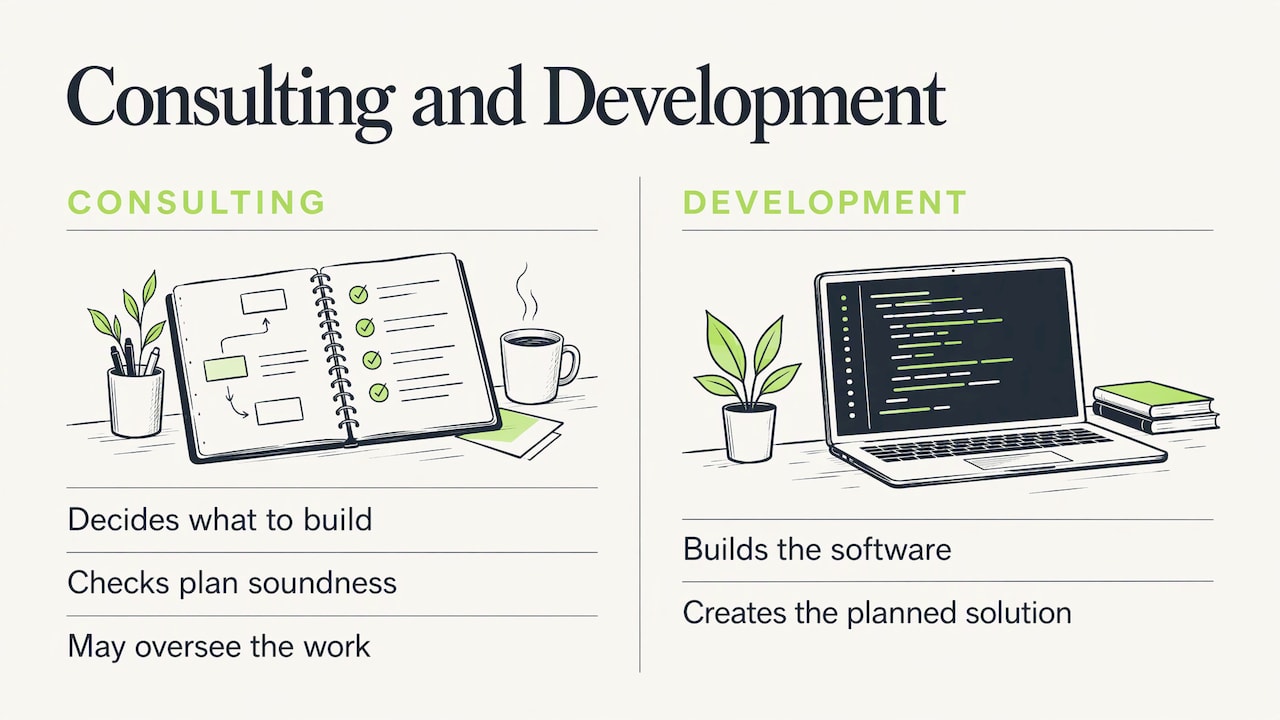
Consulting is different from development. Development is building the thing. Consulting is deciding what the thing should be, checking the plan is sound and sometimes overseeing the work. Many small projects blur the two, because the person who advises is often the person who builds. That is fine, as long as the advice comes first and is honest.
What kinds of problems a consultant can help with
You do not need a finished idea. These are common starting points:
- “I need a website but do not know what kind.” A consultant helps you choose between a simple one-page site, a full business site or something with bookings, payments or logins.
- “I have an idea for an app.” They help you work out whether it should be an app at all, which devices it must run on and what the smallest useful first version looks like.
- “My project has stalled.” Someone reviews what exists, what is missing and whether to fix, rebuild or stop.
- “I have a quote and do not understand it.” A second pair of eyes can translate the technical items and flag anything vague.
- “I need something accessible.” For a tool used by people with communication, sight or motor difficulties, early decisions about layout, sound, touch targets and offline use matter a great deal.
- “Which tools should we use?” Choosing software for a small business, or deciding between buying something ready-made and having it custom built.
In each case the aim is the same: fewer surprises, and a clearer decision.
What happens in a software development consultation
Every consultant works a little differently, but a useful consultation tends to follow this order.
1. The first conversation
You explain what you are trying to achieve. A good consultant asks more than they say at this stage. Expect questions about who will use the software, what they do today without it and what “working” would look like for you.
2. Understanding what exists
If you already have a website, a spreadsheet process or a half-built app, the consultant looks at it. They are checking what can be kept, what is causing problems and what depends on what.
3. Options, not just one answer
You should hear at least two ways forward, with the trade-offs in plain words: cost, time, how easy it is to maintain, and what happens if your needs grow. One option is often “do less, first”.
4. A clearly scoped plan
The output should be something you can keep. At minimum:
- what will be built, and what will not
- the order of work
- what you need to provide (text, images, accounts, decisions)
- how long each part is expected to take
- how the cost is worked out
That last point matters. A plan with no “not included” list is not a plan.
5. A decision, with no pressure
You should leave free to choose. If the consultant is also a developer, you can hire them. You can equally take the plan to someone else. A consultant who cannot accept that is selling, not advising.
Consulting for a custom website, app or accessible tool
Planning is where most projects are won or lost, because changes cost the least on paper.
Websites. The big early decisions are purpose, content and who will update the site afterwards. Many small business owners overspend by asking for features they never use, or underspend and then need a rebuild. My guide to what custom website development involves and costs walks through those choices.
Android apps. Questions to settle early: which Android versions you need to support, whether it must work without internet, how it will be installed and who will maintain it. Some tools are shared directly as a file rather than through a store, which is called sideloading. That can suit a small, specialised audience, but it changes how people install and update the app, so it should be planned for.
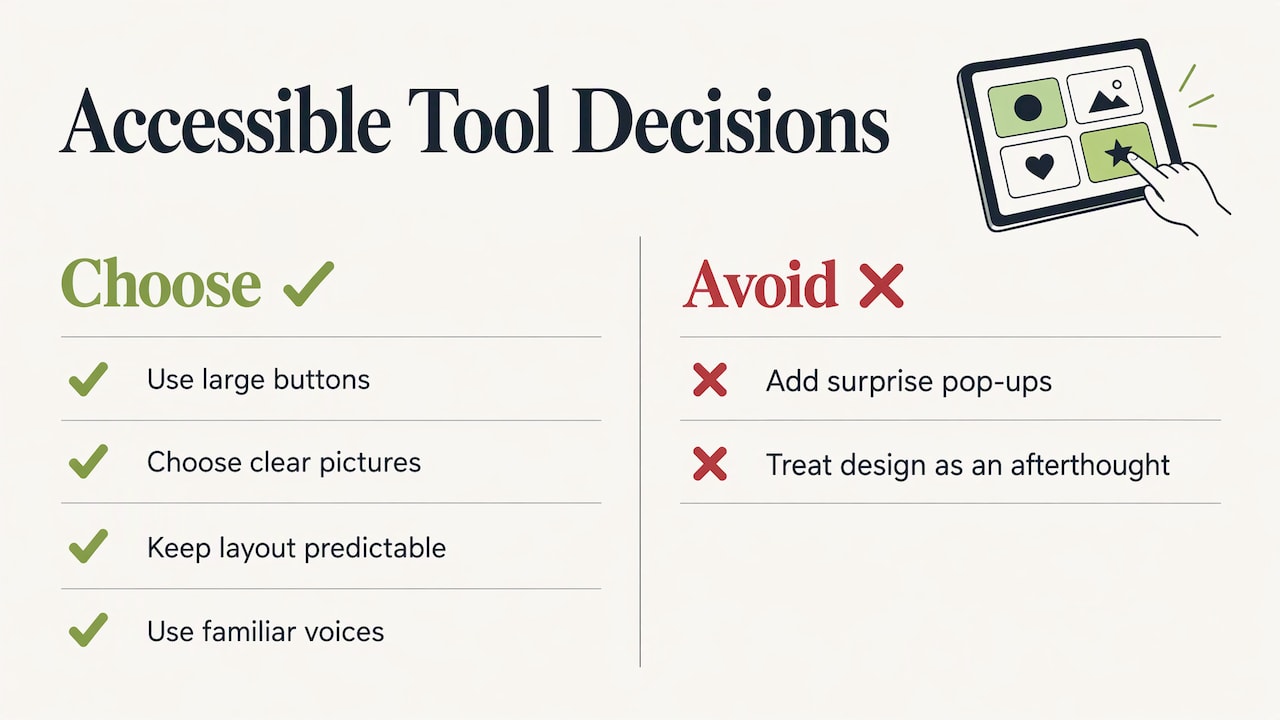
Accessible tools. If the user is a non-verbal child or adult, design cannot be an afterthought. Large buttons, clear pictures, predictable layout, familiar voices and no surprise pop-ups all need deciding before anyone writes code. Involving the person who will use it, and their family, is part of good consulting.
What to prepare before you book
You do not need technical language. Bring answers, even rough ones, to these:
- The problem. What is going wrong or missing today?
- The users. Who are they, and what devices do they have?
- The goal. What should be different in three or six months?
- Examples. Sites, apps or tools you like, and ones you dislike.
- Budget range. A range helps a consultant suggest realistic options. One published 2026 estimate puts UK onshore development rates at £50 to £150 per hour, and the final cost depends heavily on scope, so treat this as a rough guide only.
- Time limits. Any hard deadline, such as an event or a launch.
- Existing material. Logos, text, accounts, login details, earlier quotes.
- Who decides. If several people must agree, bring them to the discussion or name them.
Questions worth asking the consultant
- What would you recommend we build first, and why?
- What could go wrong with this plan?
- What do you need from me, and by when?
- How do you handle changes once work has started?
- Who owns the finished work, and will I get the files and logins?
- How long will you be available after launch?
These are normal questions. A consultant who welcomes them is usually one worth working with.
Keeping a project affordable
Cost is mostly driven by scope, so the cheapest decisions are made before building starts.
- Start small. Build the part that solves the main problem, then add to it.
- Write down what is out of scope. It stops quiet growth.
- Decide content early. Waiting for text and images is a common cause of delay.
- Use what already exists. Not everything needs to be custom. A good adviser will say so.
- Pay for planning first. A short paid consultation costs far less than rebuilding the wrong thing.
How to tell if a consultant is a good fit
Use these checks, in roughly this order:
| What to look for | Why it matters |
|---|---|
| Plain-English answers | If you cannot follow the advice, you cannot make a good decision |
| Relevant work you can look at | Real examples show what they have actually finished |
| Clear about what they will and will not do | Prevents misunderstandings about scope |
| Honest about availability | A part-time or busy adviser who says so is easier to plan around than one who over-promises |
| Written terms | Covers payment, changes and cancellation |
| Happy for you to take the plan elsewhere | Shows the advice is not just a sales route |
Also trust your own reaction. After the first conversation, do you feel clearer or more confused? Clearer is the right sign.
My perspective
I run Dbak91 on my own, and I think that is an advantage for planning work. You speak to the person who will actually do the work, and the advice stays practical.
I work full-time in a day job and take on a small number of private projects, mainly at weekends. I say that up front, because it lets us agree realistic timelines from the start and give each project proper attention instead of spreading it thin.
My own work shows how I think. My younger brother James has Down syndrome and is non-verbal autistic, and I built James Sounds, a free communication soundboard, for him. It is open source so other families can use it too. That taught me that the most useful software is usually the simplest, designed around one person’s real day.
So when I advise, I aim for clearly scoped work in plain English, at a price small businesses and individuals can afford. I would rather tell you the smallest thing that solves your problem than sell you a large one.
David
Working with me
I offer three website packages, Starter (£55), Business (£110) and Premium (from £180), plus custom Android apps from £300, which are sideloaded rather than released through an app store. Everyday technology troubleshooting is free. For in-depth project guidance, I agree the scope and price with you before any paid work begins. If you have a project in mind, or one that has stalled, we can talk it through and decide a sensible next step. My working together and cancellation terms are published so you know how it works before you start.
See the website and Android app services to find the right starting point, or read more on my blog. If you are a parent or carer looking for a communication tool, you can also try my free picture soundboard in your browser.
FAQ
What is the difference between a software consultant and a developer?
A consultant advises on what to build and how. A developer writes the code. Many small providers do both, which works well when the advice comes first and you are free to use it elsewhere.
Do I need a clear idea before a software consultation?
No. A rough description of the problem and who it affects is enough. Part of the consultant’s job is helping you turn a vague idea into a defined plan.
How long does a software development consultation take?
It depends on the project. A simple website question can be settled in one conversation, while a stalled app may need a review of existing work first. Ask the consultant how they work before you book.
What should I have at the end of a consultation?
You should have a written plan covering what will be built, what will not, the order of work, what you need to supply and how the cost is worked out. With that, you can proceed with the consultant or take it to someone else.
Sources
- What Do Software Consultants Do? A Day In The Life (Built In)
- Cost of Outsourcing Software Development in 2026 (Wise)