 Dbak91
Free AAC Soundboard App for Old Android Tablets: James Sounds
TL;DR
- James Sounds (Custom Soundboard) is a free, open source AAC-style picture soundboard for Android, built for non-verbal autistic people.
- Tap a big picture and the tablet says the word. No reading needed, and it works offline.
- A Lite edition keeps older 32-bit tablets, such as the 2012 Nexus 7 on Android 5.0, useful instead of sitting in a drawer.
- Repeated tapping ("sound spam") restarts the sound cleanly instead of piling up.
- Download from GitHub. It is not on the Google Play Store yet.
Table of Contents
- Why a free AAC soundboard matters
- What James Sounds does
- Keeping old tablets working
- Sound spam: why repetition is welcome
- Making it personal
- How to get started
- Choosing any AAC tool: what to check
- FAQ
Why a free AAC soundboard matters
Augmentative and alternative communication (AAC) covers the tools people use to communicate when speech is limited or absent. For many non-verbal autistic children and adults, that can mean pictures, symbols and devices that speak aloud. Good AAC tools exist, but some are expensive, tied to subscriptions, or need a recent device.
James Sounds started at home. It was made for my younger brother James, who has Down syndrome and is non-verbal autistic. It is shared for everyone, free of charge, so a family or carer can try a talking picture board today without a budget meeting.
What James Sounds does
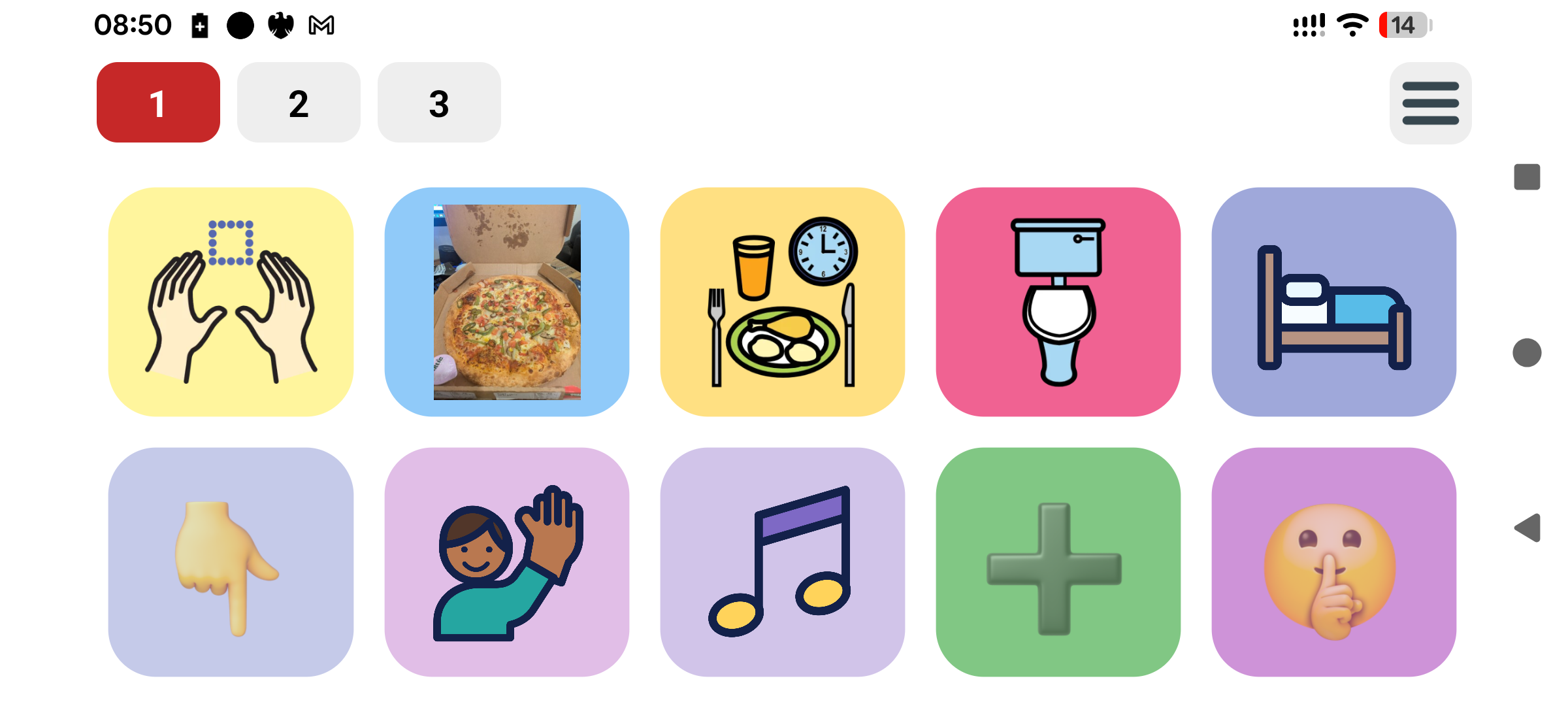
- Big pictures on strong colours. Page one has the everyday essentials such as drink, food, toilet, yes and no.
- Tap to hear the word. Each tile speaks aloud, so no reading is needed.
- Works offline. Voices and sounds run on the tablet, so there is no signal worry.
- Free and open source. Released as Custom Soundboard under the GNU General Public License v3.0, with the source on GitHub.
See the full James Sounds page for a video demonstration and screenshots.
Keeping old tablets working
A lot of capable tablets end up in drawers because new apps stop supporting them. For a communication aid that is a real cost: the device a family already owns is often the one in reach.
James Sounds comes in two editions:
- Full edition for modern 64-bit Android tablets, with offline voices.
- Lite edition for older 32-bit tablets such as the 2012 Nexus 7 (Android 5.0). Get it from CustomSoundboardLite.
If you have an old tablet that still switches on, it may be all you need to start. Check which edition suits it before you install.
Sound spam: why repetition is welcome
"Sound spam" means pressing the same button again and again to hear a sound repeatedly. Many autistic people enjoy that predictable repetition, and it can be part of learning how a button, a sound and a response connect.
Many soundboards let each tap stack on top of the last, so rapid tapping turns into noise. In James Sounds each tap stops the previous sound and starts it fresh, so repetition never builds up into overlapping sound. A tile can also rotate through several recordings.
Making it personal
In edit mode you can record your own voice or a familiar voice, pick an audio file, choose a picture and change tiles or add pages. Changes only go live when you confirm them, so a board in daily use is not altered by accident.
To see how it works before you install it, try the same board in your browser, including edit mode.
How to get started
- Decide which edition fits your tablet: Full for modern 64-bit, Lite for older 32-bit devices.
- Open the official CustomSoundboard releases page on the tablet and download the APK. Because it is not on the Play Store, Android will ask you to allow the install.
- Open the app, try the first page of tiles and tap each picture.
- Use edit mode to record familiar voices and add the words that matter most to the person using it.
Choosing any AAC tool: what to check
- Does it match how the person communicates? Pictures, symbols and spoken words suit different people.
- Does it work without internet? Communication cannot depend on a signal.
- Can it handle repetition? Rapid, repeated taps should not break it.
- Can you personalise it? Familiar voices and real photos often matter.
- Will it run on the device you have? Old hardware should not be a barrier.
A free app is a good, low-risk place to start, but it does not replace professional assessment. A speech and language therapist can advise on the right approach. See the Royal College of Speech and Language Therapists and the National Autistic Society for general guidance.
FAQ
Is there a free AAC app for non-verbal autistic children?
Yes. James Sounds (released as Custom Soundboard) is a free, open source picture soundboard for Android. Each big picture tile speaks a word when tapped, no reading is needed, and there are no subscriptions or adverts. It is released under the GNU General Public License v3.0.
Will it run on an old Android tablet?
Usually, yes. The Full edition is for modern 64-bit Android tablets. The Lite edition is built for older 32-bit tablets such as the 2012 Nexus 7 running Android 5.0, so a tablet that is too old for most current apps can still be used.
Does an AAC soundboard need the internet?
Not this one. The voices and sounds run on the tablet, so James Sounds works offline at home, at school, on journeys and in places with no signal.
What is sound spam and does the app handle it?
Sound spam is pressing the same button over and over to hear a sound again and again. Many autistic people enjoy that repetition. In James Sounds each tap stops the previous sound and starts it fresh, so repeated tapping never stacks into overlapping noise.
Can I use my own voice or pictures?
Yes. In edit mode you can record your own voice or a familiar voice, pick an audio file, choose a picture and change tiles. Changes only go live when you confirm them. You can try edit mode in your browser first on the Custom Soundboard Lite demo page.
Is James Sounds on the Google Play Store?
Not yet. It is installed from the APK on GitHub. Always download it from the official CustomSoundboard releases page.
Is it a medical device?
No. It is a simple communication aid made by a family member. It does not replace advice from a speech and language therapist.
James Sounds is a simple communication aid made by a family member. It is not a medical device and does not replace advice from a speech and language therapist.